Start date: 1.2.2024 | End date: 31.1.27
SURFIT Scaling Urban Regenerative Food Systems In Transition) is a transnational research project exploring how urban food initiatives can contribute to more sustainable, inclusive and democratic food systems. The project examines how promising local innovations can extend their impact. SURFIT is funded within the Driving Urban Transitions (DUT) Partnership, a European research and innovation programme supporting cities in their transition towards a sustainable future (read more HERE)
Research consortium:
- Mastricht University, Prof. Christian Scholl (PI, consortium coordinator)
- Trento University, Prof. Francesca Forno (PI)
- Lunds Universitet, Prof. Yuliya Voytenko Palgan (PI)
- Uniwersytet Jagiellonski, Prof. Ewa Kopczynska (PI)
- Municipality of Trento, Dr. Cristina Mariavittoria Ambrosi
- Stiftelsen Varldsnaturfonden WWF, Dr. Aaron Juarez
About SURFIT
One of the main challenges facing sustainable urban food systems is how to extend the impact of Sustainable Food Networks (SFNs), which often remain relatively small, fragmented and marginal. SURFIT explores how locally rooted food initiatives can contribute to wider food-system transformation without losing the values and relationships that make them distinctive.
The project brings together Sustainable Food Networks, local policymakers and a multidisciplinary team of researchers in four medium-sized European cities: Maastricht, Trento, Krakow and Malmö.
SURFIT’s work has developed through three closely connected stages.
Understanding how sustainable food networks scale
The project first examined existing research on scaling and identified four complementary routes through which local initiatives can extend their impact:
- Scaling deep: transforming values, relationships and everyday practices;
- Scaling out: adapting and replicating initiatives in other organisations or places;
- Scaling up: reaching more people and increasing visibility and participation;
- Scaling through: changing existing institutions, rules and systems from within.
SURFIT also studied different types of Sustainable Food Networks in the four cities, examining their organisational characteristics, internal capacities and the external conditions that support or constrain their development.
Creating Urban Food Labs
In each city, SURFIT established an Urban Food Lab: a collaborative space bringing together food initiatives, public institutions, researchers and other local actors.
The Urban Food Labs enabled participants to identify shared challenges, explore opportunities and co-design practical experiments adapted to their local contexts. They provided the social and organisational environment in which new forms of collaboration could be developed and tested.
From local experiments to potential catalysts
Each Urban Food Lab developed a pilot addressing a specific obstacle or opportunity within its local food system. These pilots were conceived as experiments with the potential to act as catalysts: practical interventions capable of activating or accelerating wider processes of change.
The project examines not only what each pilot does, but also how change occurs—for example, through co-design, education, trust-building, institutional coordination, increased visibility or the production of new evidence.
By comparing the experiences of the four cities, SURFIT aims to develop design principles and reflective guidance for other cities, institutions and food networks. These principles do not offer a single solution to be copied. Instead, they help local actors design context-sensitive experiments that can activate different scaling routes and contribute to systemic food transformation.
Four routes to food-system transformation
The video below introduces the four scaling routes explored by SURFIT and shows how they can complement one another. Transformative change does not necessarily follow a single route: local experiments may intentionally work in several directions at the same time.
Learning across four Urban Food Lab
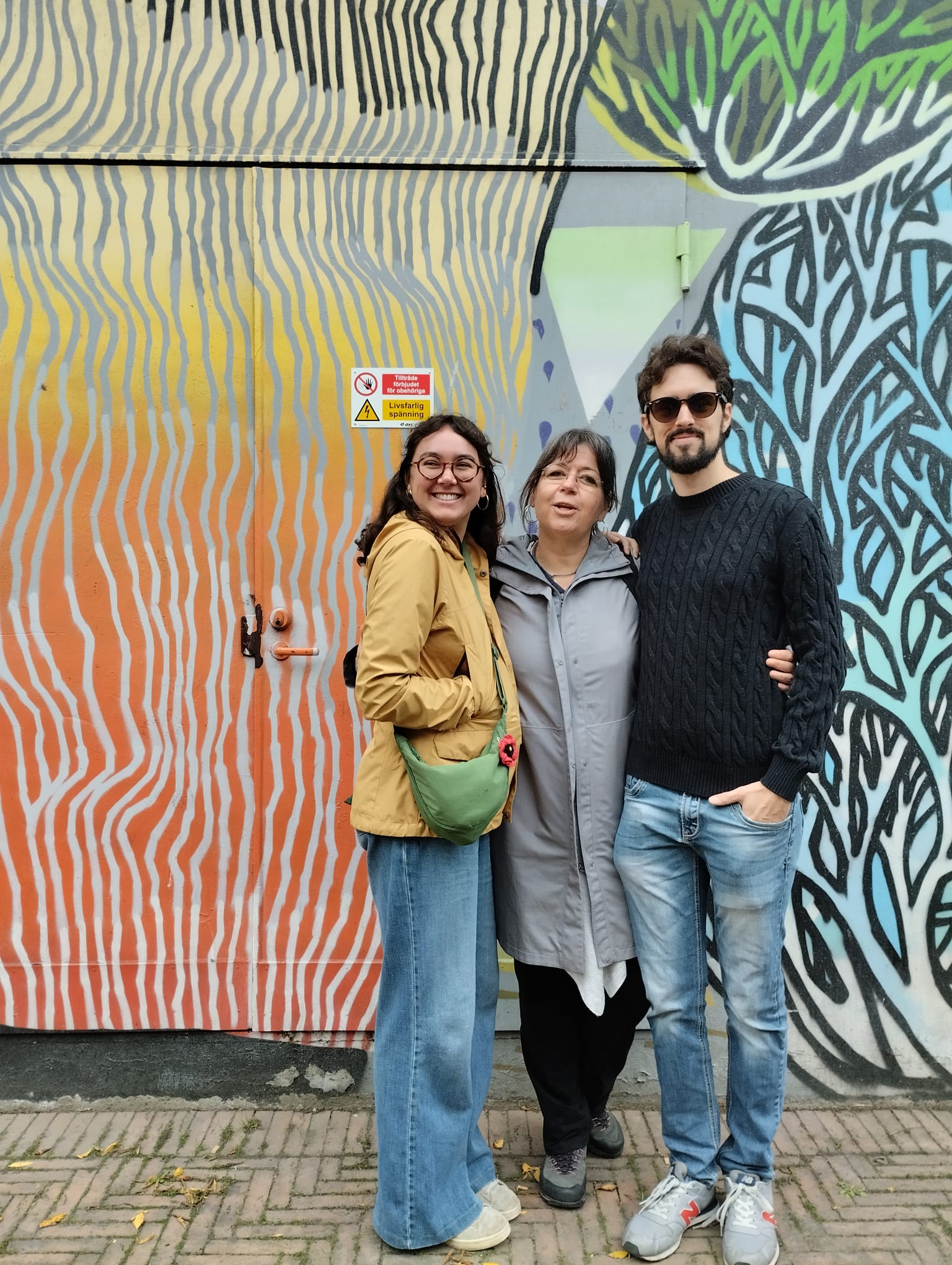
Over the course of the SURFIT project, we gathered in Maastricht, Trento, Krakow and Lund. These landmark meetings were more than moments of exchange: they provided spaces to build relationships, compare local experiences and learn together.
🌍 Discover the four towns where we built a UFL (Urban Food Lab)!
👉 Dive into the dedicated pages for each city and see how our Urban Food Labs took shape, one meeting at a time.
📸 Explore the cities, the people, and the moments that made it happen.
Rassegna stampa