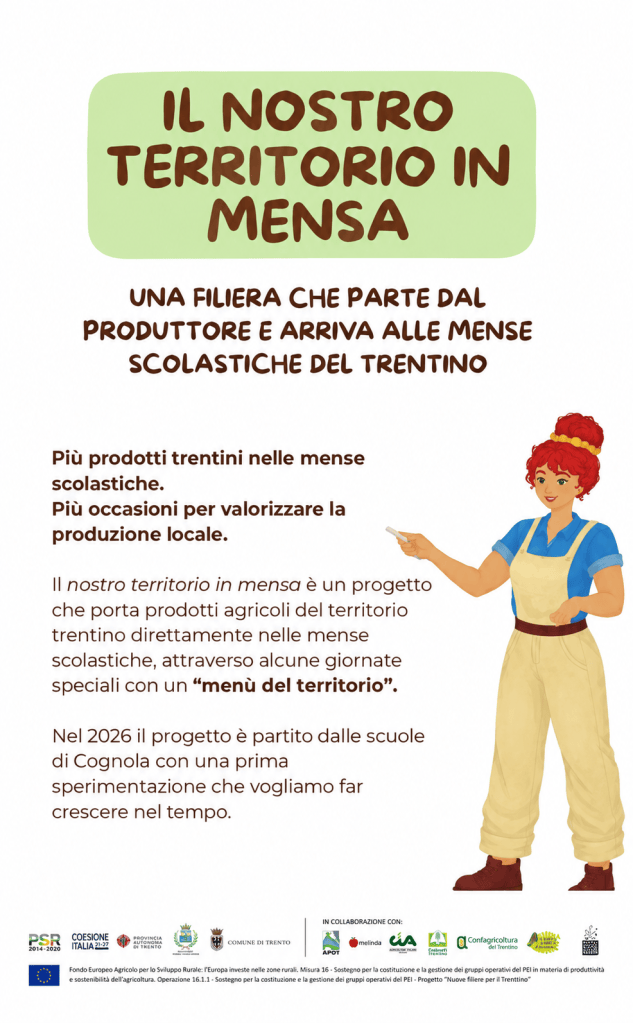
Our Territory on the School Menu (Il nostro territorio in mensa) is a pilot initiative developed by the Trento Urban Food Lab within the SURFIT project. It explores how school meals can become a catalyst for connecting local food production, public procurement, education and territorial development.
The initiative emerged from a working group established during the 2025 Bio.logicA festival. It brings together the Municipality and the University of Trento, the Comunità della Valle dei Laghi, the school-catering provider Risto3, local farmers and agricultural organisations. Following a mapping of the products available from local farms, the partners jointly designed a menu reflecting the agricultural resources and food traditions of the Trentino area.
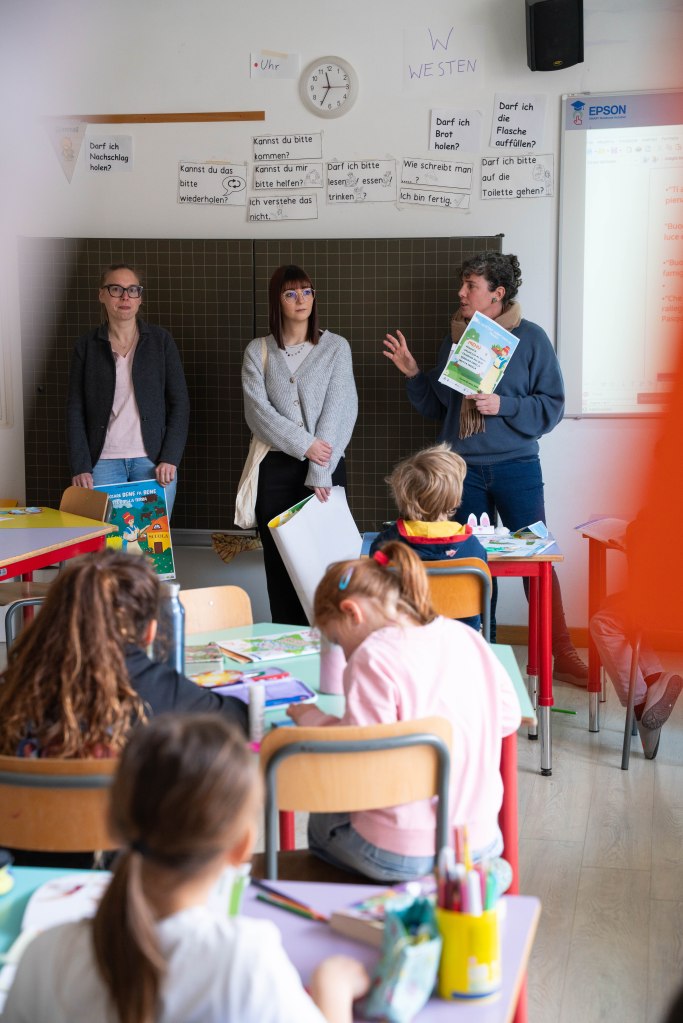
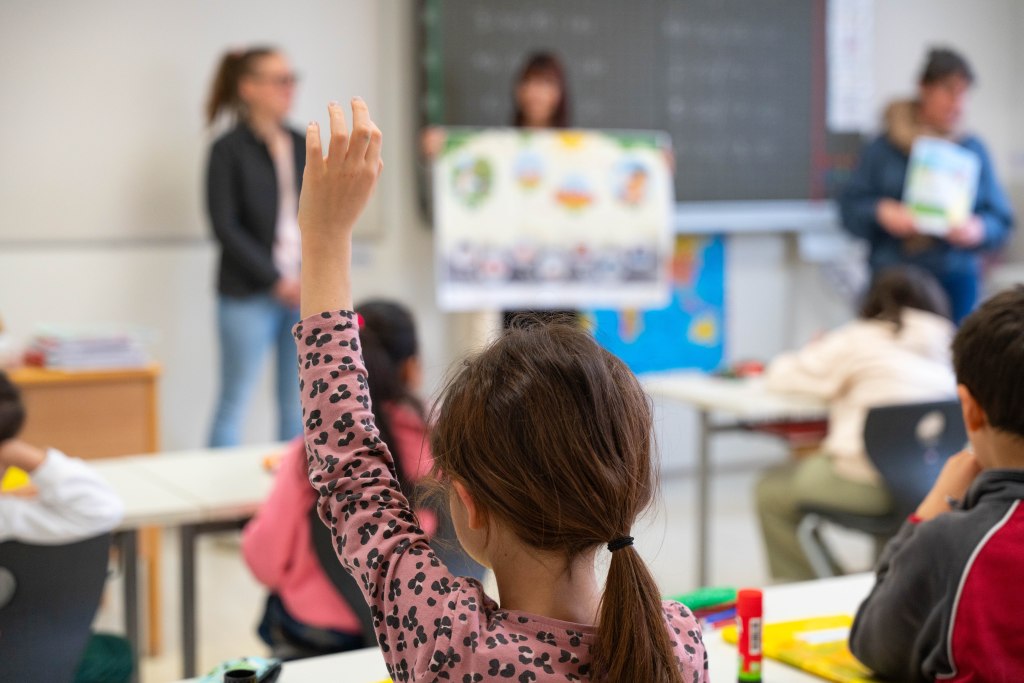
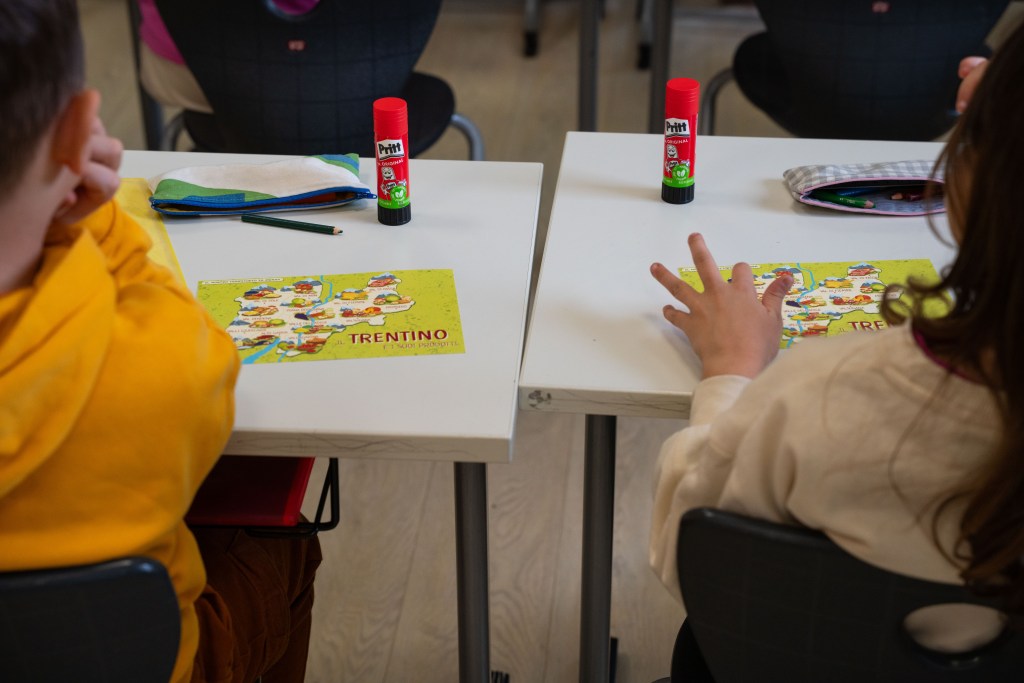
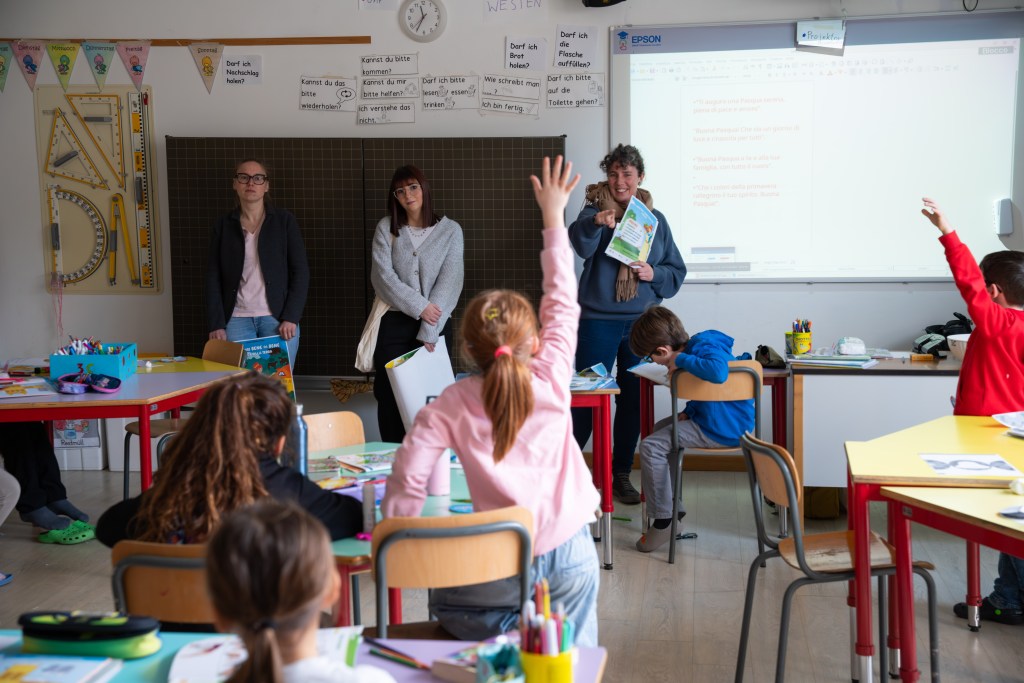
The pilot was launched at the Comenius Comprehensive School in Cognola, involving primary and lower-secondary school pupils. On four dedicated days during the 2025–2026 academic year, students were offered meals prepared with ingredients supplied by local producers. Alongside introducing local food into the school canteen, the initiative encouraged children to learn where their food comes from, who produces it and how food choices affect health, the environment and the local economy.
Applying the emerging SURFIT design principles
Within the Trento Urban Food Lab, Our Territory on the School Menu was developed as a pilot with the potential to catalyse change in the local school-food system.
The pilot reflects three emerging SURFIT design principles:
- Design for multiple scaling routes. From the outset, consider how a pilot can contribute to different forms of change: transforming values and practices, enabling replication, increasing its reach and influencing institutional arrangements.
- Adapt the pilot to the network and its context. Build on the capacities of the actors involved and respond to local opportunities and constraints. In Trento, this meant drawing on the Nutrire Trento network, local producers, the Municipality’s coordinating role and the existing school-catering system.
- Use collaboration and experimentation to generate change and learning. Bring together actors who usually work separately to identify barriers, co-design and test practical solutions, and produce evidence for future decisions. This process makes it possible to understand whether and how the pilot can accelerate wider change.
Four complementary routes to change
The four SURFIT scaling routes help us understand the different ways in which a local experiment can contribute to broader food-system transformation.
Scaling deep: changing values and everyday practices
School meals become an educational and cultural experience through which children can discover the origins, seasonality and value of local food. The pilot aims to strengthen their connection with the surrounding territory and increase their awareness of the social and environmental implications of food choices.
Scaling out: adapting and replicating the model
The Cognola experiment provides an initial model that can be adapted and replicated in other schools and local contexts. Its methods, partnerships and lessons can inform the development of similar initiatives elsewhere.
Scaling up: increasing the initiative’s reach
Starting with the pilot at the Comenius Comprehensive School in Cognola, the initiative could progressively involve more schools, pupils, families and local producers. This would increase both the quantity and visibility of locally sourced food within Trento’s school-meal system.
Scaling through: changing the system from within
The Municipality of Trento acts as a convener and institutional intermediary, bringing together local producers, agricultural organisations, researchers, the authority responsible for school catering and the catering provider.
Through dialogue, coordination and joint experimentation, these actors can address logistical, organisational and regulatory barriers that none of them could overcome alone. The pilot can therefore help integrate local and sustainable food more firmly into existing school-catering practices and policies.
From a local pilot to wider change
By intentionally working across these four scaling routes, Our Territory on the School Menu goes beyond providing a limited number of local meals. It becomes a real-world experiment in democratic food procurement, in which needs, resources and purchasing arrangements are collectively examined and redesigned.
The Trento Urban Food Lab provides the space for collaboration and experimentation. The pilot is tested as a potential catalyst, while co-design, education, institutional coordination and shared learning are the mechanisms through which wider change may be activated.
By observing this process, SURFIT can assess the pilot’s catalytic potential and draw lessons that may help make school catering healthier, more sustainable and more closely connected to local food systems.